Sunday, 17 November 2019

Review: Homo Deus: A History of Tomorrow

Homo Deus: A History of Tomorrow Homo Deus: A History of Tomorrow by Yuval Noah Harari
My rating: 3 of 5 stars

This is my last and final book of Yuval Noah Harari. Ideally, you should read Sapiens first, as it is about the past, 21 Lessons for the 21st century second, and Homo Deus at last as it is about the future. I don’t think Yuval has done great justice to the title, though he makes it very clear that he doesn’t try to predict the future exactly.  The problem arises when he tries to paint an exaggerated picture of our possible futures. I think this happens so, because, Yuval Noah Harari is a historian and not a futurist or a technology guy.

This book is broadly divided into three sections. Homo Sapiens conquers the world, and then Homo Sapiens gives meaning to the world, and finally, there comes a stage where  Homo Sapiens loses control of the world. In the first section, he explains how Homo Sapiens became the most powerful animals on the planet earth, just because they had the ability to cooperate in very large numbers. In the second section, he talks about the power of fictional entities such as money, corporations, etc, and how they rule our world, and in the final section, he contemplates how we may lose control of the technological Frankenstein monsters that we have created, especially AI.

This is how the book starts: It was the third century millennium, and humanity personified wakes up from a dream and contemplates the human conditions of the distant past. It finds that human beings would usually die for three main reasons. They are Epidemics, Violence, and Famine. He goes on to explain how those three main causes, at different points of time would wipe off as much as 5-10 percent, even 15 percent of the population, and this trend continued for ages together.


Until the dawn of the 20th century, when, aided by scientific advancements, we put an end to some of the deadly epidemics such as smallpox, for example, managed to find the solutions for famine and increase the agricultural production much folds and as far as violence is concerned, though the 20th century saw some of the deadliest wars in the history of mankind, we can safely infer that violence has been on the decline. Even the famous Stephen Pinker noted for the book The Better Angels of our Nature makes the same point.

Then something interesting happened. Epidemics, violence, and famine were replaced by Peace, Prosperity, and longevity. If you take the aspect of peace, we live in the most peaceful times ever before. Though skirmishes happen here and there at certain parts of the world, it is not severed and rampant as it used to be in the distant past. Most of the nations especially the giants such as India and China have lifted themselves out of extreme poverty and are on the way to becoming substantial players in the international arena. The life span of humans has increased from 40 in the medieval ages to 80 presently. So far, so good.

Now that we have made such a great transition from poverty to prosperity, epidemics and early death to longevity and good health, what the human will aim from now is Immortality, the divinization of humans, and happiness. Divinization here means humans acquiring superhuman capabilities aided by technology. The problem I have with the happiness part is that happiness is an elusive phenomenon. We should strive for meaning in life and not happiness. Just because we have doubled the life span from 40 to 80, doesn’t mean we can increase the life span again from 80 to 160, no matter how sophisticated we become in terms of technology. Because the scaling laws kick in.

We will achieve immortality and divinization primarily through 3 means according to Harari: biological engineering, cyborg engineering, and non-organic engineering. Biological engineering will be powered by nanotechnology and genetic engineering. Cyborg engineering will take place by fusing technology with biology and non-organic engineering is nothing but AI and ML. The real threat will emerge when the AI algorithms become so smart that they will go on to outwit human beings. I don’t subscribe to this view though.


What I like about Harari is his way of explaining even the most sophisticated concepts in the form of the simplest metaphors. Take terrorism for instance. He says that we should be worried more about the overreaction to terrorism than terrorism itself. He weaves a beautiful metaphor to explain this. There was a housefly that wanted to slide off a teacup in a china shop which is full of cutleries made of porcelain. But, it cannot do on its own. So, what it does is finds a bull nearby and buzz in its ear. The bull, irritated by it, in a fit of rage destroys the entire china shop. The phenomenon of terrorism is very well explained indeed. But the reality is far from the ideal scenario. Sometimes, it pays to call spade a spade, and I have my reservations on this topic. 

Apart from that, the book has interesting lines such as Coca-cola is more dangerous than Al Qaeda and glucose is more dangerous than nuclear weapons. Those statements are very much true. Diabetes, obesity, and suicide kill more people than war and violence. But does that mean all of his claims about the possible futures that we might have been true? I doubt that. Not because the book lacks scientific or statistical rigor, but the claims sound more like a hyperbolic version of our future.

If you ask me, if this book is a good read, I would be a bit baffled because I don’t know what to say. Yes, if You have read Harari’s earlier books, you would definitely enjoy this one. As far as the technical soundness of the facts presented in this book is concerned, I have my reservations So, the rest is up to you.


View all my reviews

Friday, 25 October 2019

Fiction vs Non-Fiction: A Perspective from a hardcore Non-Fiction reader

I am a non fiction reader to the core. And, I hate reading fiction.  I  know that it  is a grave mistake, which I am slowly realizing now a these days. But I  can't help it. Recently, I was given the classic War and Peace  by one of  my friends . I failed miserably at it.I  read 100 pages and  I was out. I could not complete it, and I had to put it down. In my friend's words, I was just another victim of War and Peace!I am sure you must also have  had a similar experience like me with few fiction books.

That event  kept me thinking as to which is more important: Fiction or Non-Fiction. Both have their pros and cons. What are the benefits of reading fiction? Is it so that  we really gain useful knowledge by reading non-fiction books?Are there really great benefits as many claim to be. Let us see. In this post, I am going to attempt to answer at least some of the questions that many have lingering in their minds. 

The answer to the question whether to read fiction more or non fiction depends on the type of person you are. If you are an imaginative type, then reading fiction will definitely prove to be an enjoyable experience. Nothing can be more joyful than picking up a classic, and delving deep in to the minds of characters, and vicariously living  their lives . On the other hand, if you are thinking type, who loves facts and concepts, then you would definitely enjoy non-fiction. Think Malcolm Gladwell’s books for that matter.

But to answer the main question, ideally you should strike a fine balance between the two genres. Nassim Taleb, the modern day saint comes to my mind with respect to this. He tweets: almost all of what's in these  mounds of "nonfiction" books is BS.However, much of what's in fiction is pure truth”.He nailed it with those words. We live in a world where there is more misinformation, fake knowledge and pseudo science than genuine stuff. In that case, it becomes really hard to discern which is a good book and which is a bad one, especially when it comes to non-fiction books.

It is only by reading both kinds of books that we get a holistic perspective of the world. In case of fiction books, you will find that , it is in the form of stories that the moral is hidden. Non-fiction is straight to the point, and it misses the mark in driving the message due to its obviousness. So, keeping this in mind, we have to be very choosy in picking up a non-fiction book.

You better follow the Sturgeon’s law when it comes to reading books; be it fiction or non fiction. Sturgeon's  law says that 90 percent of everything is crap. But  the catch here is that, to understand the top ten percent of the books, you have to wade through the remaining 90 percent. You have to read plenty of mediocre books to understand the value of great books. That is the secret of being a great reader.

Hope, you will agree with me on many points. If not, I would love to know what are your thoughts. So, please leave your comments below .Thanks for reading!  


Monday, 21 October 2019

Review: God: A Human History

God: A Human History God: A Human History by Reza Aslan
My rating: 5 of 5 stars

This was my first ever book of Reza Eslan. It was really amazing. This book is as interesting as Sapiens, and in certain theoretical aspects, much better than it,when it comes to explaining the origin of religions. This is short and crisp filled with many interesting facts about the origin of religions, especially in the middle eastern regions. Let me tell you, what this book is not about. This book doesn’t talk about the origins of far eastern religions such as Hinduism, Buddhism, Taoism or Shintoism, though you will find the mention of Hinduism here and there. It exclusively deals with Abrahamic religions to be precise.

What makes this book a pleasant read is that it explains even the most abstruse cognitive mechanisms that lead to the origins of some kind of belief in Supernatural phenomena in very simple terms. This book has concepts such as HADD( Hypersensitive Agency Detection Device),Theory of Mind(ToM),Substance Dualism, Cognitive Dissonance and much more. Instead of I explaining what these concepts are, you should read the book to know more about them. Reza Eslan, being a religious scholar and a creative writing professor has done a fabulous job at explaining these concepts, which I believe, anybody who wants to understand the religion should know.

Sapiens made me think that it is the power of story telling, which led to the origin of religions, is the sole domain of Homo Sapiens . But Reza Eslan says no. The extinct human species such as Homo Habilis, Homo Erectus, Homo Denisova and even Neanderthals indulged in some spiritual practices  in some form or the other. One of the anthropologists in the book goes so far in calling Homo Sapines as Homo Religiosus(The worshipping human). But that name should not be restricted to Homo Sapiens alone in my opinion.

Two factors have played a very important role in the origin of religions: dreams and complexity of the world in which our pre-historic ancestors lived.It is only in our dreams that we conjured up weird images, and that, coupled with certain cognitive mechanisms, made our ancestors believe in some super natural power. To add to that, our creation of our Gods were limited to our imagination. To give you an example, if horses had the capacity to draw and were asked to draw a version of their Horse God, they would draw their God which would look just like a horse. Same was the case with the humans too.

To delve even more deep into the subject, this book says that, animism is  the foremost form of beliefs our ancestors had. Animism is a belief that everything, whether living or non living has a soul. We sustained on this belief for tens of thousands of years. Slowly, this was also one of the reasons why we developed manism, the belief that, our ancestors have souls and they go on to live in some celestial world.Just to give you a tidbit, it is the reason why whenever someone died, the people of  Egyptian and Mesopotamian civilizations, buried the body with the heads decorated.Because they believed that the soul resides in the head.

Gobekli Tepe, a place in Turkey, the book mentions remains a very importance place for the study of origin of religions. It is the receding  of Ice Age, I thought that gave birth to Agricultural revolution.But no. As per the sculptures found in Gobekli Tepe, Reza hypothesizes that the people of Gobekli Tepe;to satisfy their spiritual inclinations were so much involved in the building of sculptures that, they had to give their hunter-gatherer  lifestyle as it was not feasible anymore. Then, they started rearing crops and that is how the Agricultural revolution came into place and spread throughout the world.

Then the book goes on to explain in detail, how the monotheistic religions took their birth deep rooted in concept of henotheism; meaning, one supreme God presiding and ruling over other Gods.It all changed with Egyptian Pharoah Anekhetan, who was the world’s first ever person to get revelation from the Egyptian sun God Re and established the world’s first monotheistic practice in the Egyptian empire. Then, followed by a tribe in the Canaanite region whom they called their God Elohim or Eloha(coming from the Sumerian word Ilu, which means the lofty person),who went on to be called later as Jews . 

With the coming of Moses, he reshaped the canaanite spiritual tradition by establishing the supremacy of Yehowah over the pre-existing Gods of the Israelites. Then,the same kind of spiritual revolution happened in Persia when a person belonging to the priest class  by name Zarathustra Spitoma receives a revelation about the God called Ahura Mazda. As the time passed by,it was the time for Jesus to come and declare that, “ I and my father are one” which was a revolutionary thought at that point of time followed by the Arabian Prophet Muhammad, who unified the tribes in Arabia with his revelation from Allah.

He concludes the book by explaining the concept of Pantheism- everything is God. This was in line with the Spinoza’s God. Predominantly this book deals with the humanization of the Divine, and as the book progesses,with the Divinization of the human.All in all, it was a great read, especially for some one who wants to know the origin of the Abrahamic religions in particular. I thoroughly enjoyed it, and I encourage you too to read this book, because, we are after all, the ultimate expression of God.

Good Job Reza Eslan! I loved it. Waiting for your next book to come.


View all my reviews

Wednesday, 9 October 2019

Review: The McKinsey Way

The McKinsey Way The McKinsey Way by Ethan M. Rasiel
My rating: 3 of 5 stars

I have an omnivorous taste when it comes to reading books, and my choice of books is driven by my curiosity. If I want to learn any subject, I have a thumb rule. I would read the best 5 books written on that subject. Recently, I was fascinated by the subject of consulting, and decided to master the subject by reading the best books ever written on that subject. So,when I typed in Google, “ the best books on consulting, the book The McKinsey Way was among the top 5 books. Hence, I decided to give it a try. So, in this blog post, I want to share with you whatever knowledge I have gained from reading the book.

The book McKinsey Way was written by Mr. Ethan M Rasiel, a former consultant who worked for McKinsey. Having been with McKinsey for few years, he enlightens the readers about the so called closely guarded secrets, techniques and concepts which McKinsey has been using for many years to solve the pressing problems of the major corporations and the different governments of the world at large. The McKinsey, among the elite corporate circles, is known as the Firm. It was founded in the year 1926. The firm’s hierarchy is plain and interesting. First comes the client, second the Firm and third are the employees.

To start with, the author introduces the readers to the concept of MECE. It stands for Mutually Exclusive and Collectively Exhaustive . To simplify it,MECE is a way of thinking about a problem.With the given constraints and taking into account certain incompatibilities, how to arrive at a solution. Anybody who steps into McKinsey, the first thing that h/she would learn is MECE. It is an indispensable tool for solving the problems of the clients.Apart from this there are so many conceptual tools,such as the 80/20 rule being the obvious one, which would help not only an aspiring consultant for instance, but also the business managers and even the individuals with problem solving.

One of the key takeaways from the book is that, what doctors are for the individuals, the consulting firms are for the businesses. Individuals go to the doctors because they have some health issues, organizations too approach consultants because of their inefficiencies and sub optimal productivity, or they just want to grow bigger , or to grab a bigger share in the market. You might be wondering, why not the firms do the analysis themselves instead of paying the consulting firms in millions of dollars. The catch here is that, corporations , just like individuals lack the insight about their problems. Hence, a dispassionate outsider perspective with objective analysis is how the consulting firms help the organizations or the governments in attaining their objectives.To elaborate a bit more, a patient with a headache might think that it’s just a simple headache, but it might be something more serious than that.Similarly, even the consultant’s job is not to just solve the problems posed by the client, but have a look at the bigger picture and point out to them the real problems, which might be in some cases,more serious than they have actually imagined.


That being said, let me now take you through the exact problem solving methodology of McKinsey.

1.Initial Hypothesis- It is how you actually frame the problem or define the problem
2.Fact Based Analysis- Gather data from as many sources as you can for the objective analysis of the problem.
3.Rigid structure- Every problem has to go through a set pathyway of problem solving.

Now, you might be wondering, how does McKinsey gets clients? The obvious answer that comes to anybody’s mind is selling. But no.The firm doesn’t do active selling. The Firm doesn’t sell its services by cold calling or marketing or any other means that you can think of. Rather doing that, it markets itself. And, there is a big difference. What the firm does is , it encourage its employees to actively participate in networking events, become the board members of the organizations,play advisory role to the NGO’s etc. In this way, so much of leads get generated informally. Word of mouth marketing, being the most powerful one, is how business is generated for McKinsey.

It is every MBA grad’s dream to get into McKinsey Firm. To get into the Firm, is not as easy as you imagine it to be. They look for stellar academic record, MBA from a premier university in the world, and yes you need to be of average intelligence to make the cut.But, the story doesn’t end there. Even after you become a part of the McKinsey, you have to prove your mettle, as, the organization is purely meritocratic.You are only as good as your last assignment. There is no room for mediocrity at all. The consultants , known as the Engagement Mangers work in a small team of 3-6 members, and go on to form very close bonds with each other. Working with McKinsey can be an intense learning experience. Astonishingly, the average tenure of a consultant in the McKinsey is 2 years. Need I say more?

This book is over all, a good book, though it didn’t cover all the aspects of consulting. This book would have been even better if the concepts were illustrated with specific case studies, so that the reader would understand the context better. Moreover, this books has routine advice such as the importance of team bonding, active listening, obsession to service among others. That’s why I felt, as the book progresses, only 70 percent of it is actually worth reading. The rest of the content can be found in other business books too.

That's all I have for you now. Keep reading . Sia.


View all my reviews

Wednesday, 3 July 2019

Review: The 5 AM Club: Own Your Morning. Elevate Your Life


My rating: 3of 5 stars


My thoughts on Robin Sharma before I review the 5 AM CLUB:

I am not a Robin Sharma fan. But I have watched all of his videos online. Especially the Mastery sessions are very inspiring and informational. One of my favorite Mastery sessions' videos is 9 Rules for a Monumental Life. In certain areas of my life, Robin Sharma has really helped me gain clarity to a certain extent. But I like Robin Sharma more as a speaker than as a writer. I look up to him but am not a self-proclaimed fan of Robin Sharma (Just to reiterate!). But yes, he certainly deserves to be one of the most highly paid speakers in the world. He is both charismatic and makes his point in such a way that it has a lasting impact on the listener.

Now coming to his books, I have read almost all of his books such as The Monk Who Sold His Ferrari, The Greatness Guide, Who Will Cry When You Die, The Leader Without Title, The Secret Letters of the Monk Who Sold His Ferrari among many others. I am talking about my college days though when I was still maturing as a reader. These books in a way really helped me to read more. And when you are a budding reader, whichever book makes you read even more is a good book(This is just my opinion!). Self-help genre is a good starting point for the budding readers, but the point is that you should not get stuck with it.

 Review of the 5 am club

I picked up his recent book the 5 am Club after lots of hesitation because I heard mixed reviews on various online platforms such as Good reads and the book clubs that I go to. But that I didn’t deter me from reading the book The 5 AM Club. And I also have a personal reason for this. I am not a morning person and I hate getting up at 5 am.  Before this, I have read the book The Miracle Morning famous for its morning routine model SAVERS(Silence, Affirmations, Visualization, Exercise, Reading, Scribing). It had a negligible effect on me. It didn’t change me much as a person though. This book the 5 AM Club , I find is old wine in a new bottle.

The main thesis of this book can be summed up as: Rise up early in the morning at 5 am and   this practice will elevate your life. The most important concept of this book, in my opinion, is the 20\20\20 rule. The first 20 minutes when you wake up at 5 am, the first 20 minutes should be for vigorous exercise, the second 20 minutes for spiritual activities such as prayer, meditation or journaling and the last 20 minutes for learning and growing. Waking up at 5 o clock in the morning should not come at the cost of sleep deprivation though. He equally vouches for sleep hygiene to perform in our daily lives at our optimal level.

This book has only 4 characters-the Spellbinder, the elderly motivational speaker; the woman entrepreneur, the artist and the eccentric entrepreneur Mr. Railey. Both the woman entrepreneur and the artist are guided by the billionaire entrepreneur on tactics to live a world-class life and how to elevate the humanity at the same time by waking up at  5  am and doing certain things as advised by Mr. Railey. But the problem is that the story comes across as very dry devoid of an interesting plot.Also there were too many cliches coming out from  Spellbinder and Riley.  And, I feel that the story could have been made much more interesting for the readers. But yes, those readers who are seeking self-help wisdom will definitely find some useful nuggets and useful models.

I liked this book for its unique vocabulary and fancy terms such as an imaginationist, possibilitarian, age of dramatic distractions, dream-stealers, Tight Bubble of Total Focus(TBTF), history makers and empire builders  etc to name a few. These words are some of the brain tattoos which shall ever be ingrained in my mind forever. On top of that, what I liked about this book is that it's stressing on living a life true to your values and not getting lured  into the pursuit of shiny toys. You can be both a warrior and a poet at the same time.

My contention with the book is that what is so magical about the time 5 am. The tactics which the author advises the readers to follow, for instance, reading and learning can be done at any point of time during the day. It need not be necessarily at 5 o clock in the morning. I am sure the morning persons will disagree to my point. But, I still want to stick to my guns.

So my final verdict: pick up this book for the paraphernalia of tactics, if you implement, can prove to be total a game changer for your life.. But that doesn’t mean it is a great read. Most of the book’s content could be summarized in 50 pages or less. I would have loved it more if the author had penned down non-fiction on the same subject by being a bit more technical and giving case studies to prove the point. Though this book has that essence to some extent, it was bland and boring. Not a great read, but an ‘OK’ read for me.


Friday, 28 June 2019

Review: Range: Why Generalists Triumph in a Specialized World

Range: Why Generalists Triumph in a Specialized World Range: Why Generalists Triumph in a Specialized World by David Epstein
My rating: 4 of 5 stars

 Range-Why Generalists Triumph In a Specialized World is a book that questions the very foundations of specialization. As a society, we are obsessed with the specialization of skills. Our world is still living on the foundations of the Industrial model, and it has become outdated long ago. But, unfortunately, we are unable to get rid of the cult of specialization because of the thinking that why be a generalist when you can be a purist? And, this distorted thinking is costing us a lot.

Take the very recent global recession that happened in 2008. One of the main reasons could be attributed to the silos within the finance industry. And this kind of silos emerge within and across the industries only when there is no cross-communication between the different departments or the industries. This could be because of the stress on the hyperspecialization of the workforce. Cross-functional thinking did not happen because of which trillions of dollars eroded from the global economy. This is something which could have been very much avoided only if the policymakers had encouraged the idea of perspective taking in education which only comes by adopting a generalist approach.

The book questions the basic tenets of the specialization. For example, take the very famous ten thousand hour rule. if you want to be a world class in only one area, yes, the famed 10,000-hour rule certainly helps. But, what if you want to develop multiple talents? There comes the dilemma. Take Mozart or Beethoven for example. They breathed and lived music for the rest of their lives. In this case, the so-called deliberate practice certainly helps. But what if you want to be a Renaissance Man like Leonardo Da Vinci or Benjamin Franklin or Herbert Simon? By the time you apply the 10,000-hour rule to develop a wide repertoire of skills, you will be dead! (Just kidding).We need a much more sophisticated theory to explain the phenomenon of Renaissance Man.

In today’s volatile world of technological change, it is only taking the generalist approach towards having a repertoire of skills that will be able to save us. One should be like a swiss knife (if at all that metaphor helps!) Yes, I know that our society is rife with proverbs such as ‘jack of all trades and master of none’, and ‘if you try to catch two hares, you will end up catching neither’. But, those proverbs should not encourage us to take the narrow path in any way. To negate those proverbs, Winston Churchill also said, “Never, never, never give in, except to the convictions of honor and sense”.And that translates to Winners never quit and quitters never win is a fallacy. The book is beautifully explained by Seth Godin in the book The Dip. What the author advocates is a T model of learning instead of the I model of learning. Going wide in so many areas of knowledge, and having great depth in one particular chosen field so that you would be able to contribute to your field aided by the perspectives from the knowledge of different subjects.

The author introduces the reader to the concept of SAMPLING PERIOD. The sampling period is a phase where a child experiments with different pursuits to know which suits best for him/her so that the little experience that he\she has gained in those different field helps him\her later when she focuses on a field or a wide range of fields to prove her mettle. To corroborate this fact, the famous tennis player Roger Federer, Charles Darwin, and Vincent Van Gogh have gone through the same phase. The case of Vincent Van Gogh was particularly striking. He tried his hand at painting when he was a child. He didn’t like it. Later on, he tried his hand at various pursuits such as being a librarian, pastor, music teacher, and miscellaneous others. Later on, at 33 when he wanted to be a painter again, the perspectives he has gained from various pursuits helped him to come up with world-class paintings. In a brief period of 4 years, he totally redefined the art with his paintings. It is a great misfortune that he died at the age of 37. But his legacy will endure for generations. And, that’s the power of having a generalist approach.

The point of the generalist approach makes sense to me. Because we live more in WICKED environments than in KIND environments(There is nothing wicked or kind about these terms). Kind environments are stable environments. Take sports such as chess or surgery, where the ecosystem is fairly predictable and remain constant. But wicked environments are way different. What about environments such as gambling, war or stock markets. They are very unstable and unpredictable. In the latter case, the previous experience that one has gained doesn't help much. Because every challenge is something that we have not encountered before. And life is way more wicked than kind. That’s why we rather pull up our socks towards being a generalist.

‘Chose early, focus narrowly and never waver’ approach is not going to help us anymore. I have you given enough facts. Now the ball is in your court to decide whether to be a generalist or a specialist. Because generalists will triumph in a specialized world.

Signing off for now.

Thank you.


View all my reviews

Tuesday, 25 June 2019

Review: Creativity: The Human Brain in the Age of Innovation

Creativity: The Human Brain in the Age of Innovation Creativity: The Human Brain in the Age of Innovation by Elkhonon Goldberg
My rating: 5 of 5 stars

Elkhonon Goldberg is someone who has spent his entire life time studying the lateralization aspect of the brain.This makes him one of the world’s most leading authorities on the aspect of hemispherization. I read this book because, one of his earlier books The Wisdom Paradox was recommend by Nassim Taleb, my intellectual hero. It is the reason why I picked up his recent release. And, I am extremely happy that I have read it. While you find so many books discussing the psychological aspects of creativity, this book Creativity is one of those rare books which discusses the neurobiology, neuroanatomy and neurochemistry of the brain when involved in creativity. Let the reader be informed that this book is full of technical details, which are interesting nonetheless.

Creativity can be defined as producing something original and at the same time useful. He proves in this book that three main aspects of the brain are important for creativity. The first one is the right hemisphere, the second one is the prefrontal cortex, which occupies one third of the brain and is responsible for intelligence, impulse control, decision making and various other functions. The third one is the neurochemical dopamine, which can be called as the pleasure chemical or reward chemical  of the brain. All these three have far more important role to play in fueling creativity than we have imagined.But that doesn't mean they are exclusively required for creativity. No, the brain need to co-ordinate efficiently with all the other regions of the brain to produce world-class creativity in an individual. He totally dismantles the localization theory of the brain( just to clarify).

He starts off the book by debunking certain neuromyths such as ,how this society gets it wrong into thinking that the right hemisphere is the creativity center  of the brain, and the left hemisphere is the logical or language hotspot. There might be some degree of truth to it, but that is not all. As the chapters pass by, he explains how the right hemisphere which was neglected by the neuro scientists for many decades as the ‘subdominant hemisphere’,and later on, thanks to certain neurological experiments, we got to know that the right hemisphere has far more important role to play in the seeking of novelty and creativity. He calls the right brain as ‘neuro orphan’.Though it may sound paradoxical or antithetical to the statement made earlier, it has a pivotal role to play in human creativity.

He proves the important roles that the right brain and the left brain has to play in certain functions by giving examples of certain neurological phenomena such as prosopognosia( the inability to recognize faces) ,apraxia, aphasia(language disability)  etc. If you take prosopognosia for instance, it occurs especially when right part of the brain is damaged. In case of aphasia or apraxias, it is the left brain which loses its functionality due to brain damage. Thereby, he shows how certain neurological conditions can reveal the functionalities of the brain.


The thesis of this entire book can be summed up as the Novelty-Routinization theory of the brain.Our right brain is always in search of novelty, while the left hemisphere prefers routine. He establishes this fact by expanding on the concepts of perservatory/exploratory behaviour. He also introduces the reader to concepts of Hypofrontality and Hyperfrontality, and tells the readers, how both are required to produce creative output. Oscillating between the states of Hypofrontality and Hyperfrontality, is what he calls as  bistability. And, it is highly conducive to creativity. Yes, it is agreed that hypofrontality is a phenomenon observed in various psychopatholgies such as addiction, psychosis and mood disorders. But he is not talking about such pathological conditions . He is talking about a kind of productive hypofrontality where by the brain reaches its creative peak.

Also, the book contains some interesting facts about the brains of great people such as Albert Einstein and Nikholoi Lenin. Both the brains, it seems had one feature in common. They had an extraordinarily thick corpus collosum,which is a structure that connects the left brain and the right brain. Apart from this, the book has other thought provoking facts about how dementia especially is on the decline in the recent years. All thanks to the changing cognitive habits and the cognitive reserves that we are building up as a generation, because of the heavy demands placed by the ever changing technologies.

If you are really the one who want to explore the neuro mechanics of creativity, then pick up this book. You won’t be disappointed.


View all my reviews

Tuesday, 7 May 2019

Review: The Fuzzy and the Techie: Why the Liberal Arts Will Rule the Digital World

The Fuzzy and the Techie: Why the Liberal Arts Will Rule the Digital World The Fuzzy and the Techie: Why the Liberal Arts Will Rule the Digital World by Scott Hartley
My rating: 3 of 5 stars

In our education system today, we see a clear line of demarcation between the liberal arts such as literature, history, philosophy, political science, anthropology, sociology , psychology etc and pure sciences such as physics, mathematics, biology and chemistry . But the author says that it is a false dichotomy. That's why in the Stanford school they call those who study the liberal arts as Fuzzies and those who study science as Techies. But, they are not mutually exclusive subjects. They need each other; in fact, they complement each other.

I read this book because the title was very appealing to me. Yes, going by how the first chapter went, it was very interesting. But as the book progresses, the author elaborates on the implications of liberal arts such as political science, anthropology, sociology, literature and psychology among many others in the field of technology such as Big Data, International security, defence etc. I had very high expectations from this book, but there were so many case studies and examples given about people who were solving the most pressing problems of our times using the skill set and knowledge that they have gained through liberal arts education, which at times sounds boring to me. In fact, the author could have gone at length on the importance of various subjects such literature, philosophy, history etc to ignite the interest of the reader to know more.

The book starts with the story of a girl by name Katelyn Gleason, who with her degree in theatre arts made her way into becoming the head of the sales department of a healthcare start-up company. She leveraged on her acting skills to impress Paul Graham in raising funds for her company, who in turn convinced her to start her own company. That's how she came up with the idea of the health care start-up Eligible. Had it not been for her theatre arts background, it would not have been possible for her to have achieved so much. Yes, technical skills are important. But it is the soft skills that is gained through liberal arts education that gave her the edge. I think, the way he started the book by giving the example of Katelyn Gleason was really good.

I also learnt from this book that the CEOs of many world famous companies such as Pinterest, Slack, YouTube, Alibaba, Sales force, etc have liberal arts background. The best example is that of Steve Jobs who fused technology with arts. In that sense, he was a true genius. This book also highlights the erroneous opinion of the iconic entrepreneurs such as Bill Gates and Vinod Khosla that investment in liberal arts is waste of time and resources. But, in my opinion they are dead wrong. Now that machines are slowly matching the intellectual might of humans, it is only the liberal arts education that will come to the rescue.

The book touches on various points such as ethics of using the technology in the right way, the future job market, enhancing the ways we learn, algorithm that are our servants rather than our rulers etc. I reallyy feel that they are very nicely explained. But the author went overboard on giving so many examples about so many people who have initiated the start-ups and the impact that they had that, at times, it feels like the reader is being inundated with so much of information.This is something the author could have avoided.

In fact the need of the hour is the cross-pollination between the two realms of studies. If technology is about what and how, the liberal arts answer the question why. That's the exact reason why we need liberal arts.


View all my reviews

Thursday, 25 April 2019

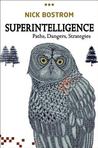
Review: Superintelligence: Paths, Dangers, Strategies

Superintelligence: Paths, Dangers, Strategies Superintelligence: Paths, Dangers, Strategies by Nick Bostrom
My rating: 3 of 5 stars

This book has been a tough read  for me. Because the language used by the author is very esoteric, and this book is filled with so many abstruse concepts such as Orthogonality, Optimization. Recalcitrance etc. I picked up this book because Elon Musk, the legendary entrepreneur and Sam Harris, the neuro scientist have recommended it. Alas, it was a disappointing read. Not that the book was boring or so, but may be because my own knowledge of technology is not that strong. The author has tried his best to explain the most complex concepts in the simplest  way possible. But, the simplicity was not enough. A layman will definitely find it hard to understand this book.

This book does not fall into the league of futurist books such as the Physics of the Future for instance, written by Michio Kaku. Mind you, the author is more a philosopher than a scientist. Moreover,this book is not about when will reach to the point where the AI exceeds the intellectual might of humans.Rather, it is about what will be the fate of humanity if  it happens so. Yes, clearly Nick Bolstrom is thinking ahead of his times. But, this book was too complicated for me to digest.The author makes it clear that he does not want to make use of the word Singularity for the reason that the word does not fully capture the essence of the phenomenon where AI fully overtakes the humans,which has far reaching implications for the mankind.

But yes, there are certain points which I liked in this book, and they were in the first few chapters.
The concept of whole brain emulation was really interesting. He talks about modelling the AI superpowers by simulating the human brain. But that too seems to be a very distant possibility going by the current situation. At present, to the best of my knowledge , with all the advances we have made in the neurotechnology, we hardly know only 5-10% about the human brain. I don’t know how many years it will take for the Connectome project to finish, which aims at mapping the entire 100 billion neurons of the human brain. And, it is not going to be easy. Because it is a cross-disciplinary project.

The second and a very controversial chapter is on biological cognition. Nietzsche proclaimed to the world that he will teach the secret of how to become a superman. That is what the author propounds in this chapter in a way. Biological cognition talks about the enhancing the intellectual capabilities of human through various intentions such as genetic engineering, drugs that would increase one’s cognitive horsepower etc, so that our brains would be better suited for modelling for superintelligence.But such interventions can lead to unwarranted side effects and have unintended consequences.

The author also writes about how brain-computer interfaces will become the norm of the day in the future if at all we achieve superintelligence .In the near future, humans should learn to co-exist with machines and AI enabled devices. This is something which has already started happening.But my objection is that(I may be wrong); generally in the market, only those technologies will thrive that complements the human ability and not replaces the need for human ability. In that way, the concept of existential risk seems to be very apocalyptic to me. Because, on the other hand, we have technology evangelists like Tim o Reilly who say that technology will always complement the human ability and the probability of technology or AI overtaking humans sounds like science fiction to me.


View all my reviews

Tuesday, 23 April 2019

Review: The Mind Game

The Mind Game The Mind Game by Devika Das
My rating: 4 of 5 stars

While there are plethora of books on personality development and self-help, I find this book to be unique. The author has named this book as Mind Game probably because, she used the mind as a metaphor to make the readers aware how an regulated or uncontrolled minds make us act against our self-interests; how much ever well-intentional we might be at the conscious level. Every body has aspirations and dreams, but how to make them  come true? It is by regulating your mind. And, that is what Mind Game is all about.It is the title which precisely caught my fascination and I must say it was a worthy read.The time spent with this book read will reap huge dividends if you practice at least some of the tips shared by the author Devika Das. .

This book is divided into six sections. Topics range from emotional intelligence and analyzing people to secrets of happiness and a recipe for a happy, productive workplace. Though I read lots of psychology books, in this book I find that some of the most important and intricate concepts of psychology has been explained thoroughly, and in the most lucid manner. In this way, this book becomes one of the most well-rounded books written on the development of the latent human potential written by the Indian authors.

This book is not only just rife with theories but also filled with examples. She quotes the works of credible and noteworthy psychologists such as Sigmund Freud, B.F Skinner, Eduard Spranger, Martin Seligman and Shawn Achor to name a few. I really appreciate the knowledge of the author and the pains she has taken to glean the nuggets of wisdom from various sources so that the reading audience would be immensely benefited by it.

Of all the concepts mentioned in the book, the highlight of this book is the section on Emotional Intelligence. Man is not just a thinking animal. He has emotions too. Emotions, if unregulated can hijack the rational faculty of men/women, thus landing them in trouble. Just imagine how many lives have been ruined? How many opportunities lost? How many relationships broken? And how many lives ended, just for the simple want of not able to handle the emotions properly. In that way, this book is an eye-opener. Whether one is a student, housewife, employee, entrepreneur, professional or a leader, there is a pressing need to handle the negative emotions prudently and foster the positive emotions to lead a flourishing life. The mishandling of negative emotions can lead to dissatisfied, unfulfilling lives. In that way this book is the need of the hour for youth and working professionals. Because, a great IQ may land you in a job, but to survive that job, you need to leverage on the power of EQ, and that is what this book exactly points out through various examples and interesting theories.

On a high-level, this book introduced me to the concept of emotional agnosia-the inability to read people’s emotions, commonly observed  among the schizophrenic/autistic patients. The next is Eduard Spranger’s values theory.Apart from  theories like these, this book made me introspect my own shortcomings and the steps I have to take to overcome them.Anybody who reads this book will have his life changed if at all he/she practices at least some of the tips given by the author in the book. Read this book and get ready to live a life true to your dreams. After all, it is only a ‘mind game’.


View all my reviews

Monday, 22 April 2019

Review: The Immortal Life of Henrietta Lacks

The Immortal Life of Henrietta Lacks The Immortal Life of Henrietta Lacks by Rebecca Skloot
My rating: 4 of 5 stars

I consider this book to be the one of the most realistic non-fiction books ever written. I say so because, the facts are written as it is, with no pseudonyms and all the real characters are portrayed as they are in the book. The author Rebecca Skloot clarifies the same point in the beginning of the book.

The book is named so because, the cells of Henrietta Lacks kept on multiplying themselves with no end. And I think the title is very apt.Henrietta Lacks cells were known as HeLa cells among the scientific community. Anybody studying biology or medicine or organic chemistry; I am sure, would be familiar with HeLa cells. Because, it has become such an integral part of the life sciences.


To start with, usually cells have the tendency to multiply themselves. After a certain point they begin to degenerate into non-existence or die per se. But, the lady Henrietta Lacks' cells were an exception. They keep on multiplying and multiplying and there seem to be no limit to it.The Immortal Life of Henrietta Lacks is the story of a woman who died of cervical cancer, and whose cells were taken by the medical practitioners of John Hopkins(the hospital in which she was admitted fo treatmen).


This book has two aspects:the impact of HeLa cells on the life sciences and the scientific community, and the deplorable private lives of the Lacks family.If Deborah, the daughter of Henrietta Lacks had not co-operated, this book would not have had come into existence at all.

The book starts with how, the author Rebecca Skloot came to know about the HeLa cells in one of her biology classes, and how that small hint whetted her curiosity to know more about the HeLa cells made her trace the family of Henrietta Lacks. Initially the family was reluctant to meet anybody inquiring about the HeLa cells. Through her persistence and genuine sincerity to make HeLa cells’ story known to the world, she gains the trust of Deborah, the daughter of Henrietta.From then on, the quest to make Henrietta Lacks known to the world begins.

HeLa cells even now continue to have enormous impact in various fields of medicine such as histology, oncology, epidemiology, oncology etc to name a few.This book is also rife with, how the doctors, without the consent of Henrietta or her family cultured her cells in laboratories, which gave rise to a billion dollar cell culture industry. It is deplorable that, while the pharmaceutical companies were making billions out of her cells, the Lacks’ family were wallowing in poverty and did not have even health insurance in times of need.

The Henrietta’s comparison to Jesus in the one of the final chapters of the book is very apt. Just as Jesus died to save the world, Henrietta left this world  with her cells as a gift to the humanity so that we can be saved from some of the most deadly diseases and syndromes and other pathological conditions  plaguing us since the dawn of civilization.Long live HeLa cells, and may Henrietta’s soul rest in peace!

View all my reviews

Friday, 19 April 2019

Review: Death Is Not the Answer: Understanding Suicide and the Ways to Prevent It

Death Is Not the Answer: Understanding Suicide and the Ways to Prevent It Death Is Not the Answer: Understanding Suicide and the Ways to Prevent It by Anjali Chhabria
My rating: 5 of 5 stars

Believe it or not, India is the suicide capital of the world. Out of every 3 suicides committed in the world, 1 happens in India which is appalling. Kudos to Dr Anjali Chhabria for having penned down such a book of great importance. Suicide is a topic which no one talks about, because there is so much stigma around the topic of mental illness and suicide. Another pathetic fact is that most of the people who commit suicide in India are the youth between the 15-29 age bracket. I am wondering how many lives could have been saved if this book was written 10 years back.

Death is Not the Answer is the most holistic book that I have ever come across on the subject of mental illness and suicide. Anjali has done a great job at explaining the origins of suicidal tendencies in us. In most of the cases, impulsive suicide is rare. Most of the people who commit suicide give clues, which should not go unheard or taken lightly. She starts the book by giving a great historical background of suicide dating back to as much as 2500 years, citing the examples from the scriptures of various religions and history.

The case studies that are given in this book are her own patients' stories.It is frightening to note that even a 6 year old girl disclosed suicidal thoughts during one of the play therapy sessions with her, just because, her elder brother was given more preference by her parents when it comes to milk. It was hair raising to read other stories as well.Ranging from break-ups and dysfunctional family relationships to drug and alcohol abuse this book has it all

Major Depressive disorder is believed to be the major culprit in driving people to commit suicide. But that is not the only one. Various other disorders such as Psychosis;be it Schizophrenia or bipolar, untreated Generalized Anxiety Disorder, PTSD(Post Ttraumatic Stress Disorder), Body Dysmorphic disorder and other personality disorders can also prompt a person to take the drastic step of ending one's life.

The book also talks about the neurobiology of suicide. She talks about the 'suicide circuitry' in the brain.Yes, some are prone to suicide than others . The neurotransmitter serotonin has a great role to play in the committing of suicide. She explains how using the fMRI technology the neuro scientists have observed hyper activity in the medial pre-frontal cortex, which leads to excessive rumination if unchecked can lead to suicide. Also the hippocampus becomes smaller as the neurons die due to severe suicidal depression. She also explains how genetics also plays a role in the suicide. For an instance, a mutation in the SKA2 gene can make one person more vulnerable or susceptible to suicide.

The cognitive triad of worthlessness, helplessness and hopelessness propounded by the great Aaron Beck was very interesting to know. It takes all the 3 aforementioned features to force a person to commit suicide. Also I came to know about the Beck's suicide intent scale. I did not know before that there are questionnaires to assess the risk of suicide in a patient.There are various degrees of risk of suicide ranging from minimal, mild and moderate to severe and extreme.

Medicines are not the only resort for people with suicide tendencies.Cognitive Behavior Therapy, Dialectic Behavior therapy(especially in case of borderline personality) , mindfulness meditation and other forms of counselling are some of the options available to explore, based on the severity of the case. This book is filled with lot of hope for people suffering from mental illness.


On a final note, I want to say that, this book is the need of the hour in India. I wish Dr Anjali Chhabria comes with more books like this. This book is for everybody who want to help their friends or loved one's or themselves even to cope up with the psychological problems. Life is meant to be lived, and a precious life cannot be wasted by committing suicide just because we are going through some storms. Thank you!

View all my reviews

Friday, 12 April 2019

Review: A First-Rate Madness: Uncovering the Links Between Leadership and Mental Illness

A First-Rate Madness: Uncovering the Links Between Leadership and Mental Illness A First-Rate Madness: Uncovering the Links Between Leadership and Mental Illness by S. Nassir Ghaemi
My rating: 5 of 5 stars

This is the most interesting book that I have ever read on the link between psychopathology and leadership. I have always been interested in exploring the relationship between creativity and genius. But I always thought that the leaders are immune to psychopathology of any kind. Because, that is what makes them leaders in the first place. You need to have a robust mental health to be a leader and influence people. But, I was shocked and amused at the same time to learn that even some of the greatest leaders of the world are not an exception.

The basic premise of the book is this: normal times need normal leaders and abnormal times need abnormal leaders( though not categorically).I will explain you how in the coming paragraphs. He starts off the book by giving the example of William Tecumseh Sherman who was an alcoholic to the core. He is suspected to have been bipolar going by the correspondence he has done with his friends and colleagues of his times. He was also paranoid to some extent and a chain smoker. But what set him apart from his colleagues was the ability to see things in their true light. That made him tactfully superior to his rivals during the civil war and emerge victorious.I am not saying that it is his psychosis and addictions that made him a legendary strategist of the american civil war. But I am trying to point out that it is his acumen to take a stock of the situation correctly that made him so, and that was hugely influenced by his psychopathology.

Mood disorders in particular such as depression and bipolar, apart from the discomfort, pain and dysfunction that they would bring in a person affected with a particular disorder also carry certain
benign characteristics, if heeded to, would help the person not only elevate his own life but also that of others for whom he is responsible for leading and showing the way. Nassir Ghaemi points out the concept of 'depressive realism'- the ability to see the things as they are, instead of how they should be. This can especially be crucial in times of a crisis.

If you take depression for instance, it is observed that people with depression have a heightened sense of empathy and they are hyper realistic. This is what makes them miserable in the first place. Giving the example of Abraham Lincoln, he points out that Abe Lincoln was of melancholic disposition. In today's terms he would be given the diagnostic label of a chronic depressive. It is his very depression which made him identify with the pathetic state of the slavery existing in his times, and tough stand against it. And, he was right. Without his depressive realism, America would have been a house divided against itself.

Not only realism and empathy, but creativity and resilience are also one of the characteristics of the mood disorders such as bipolar. He points out how the realistic Winston Churchill has been ringing the alarm bell against the rise of Hitler since 1930's. Winston Churchill must have been a unipolar depressive for sure, according to Nassir Ghaemi . It is his realistic assessment of the crisis which made him stick to his guns, though he had nothing to offer but blood,toil, sweat and tears. With his persistence, he saved the free world from the impending Nazi doomsday.Hitler, according to him was a Bipolar whose condition worsened due to the abuse of amphetamines. No wonder his ideologies were so flawed. Very convincing Nassir!

Mood disorders are not ' either or' phenomenon. They exist on a continuum. People like Frank Delano Roosevelt and John F Kennedy were hyperthymics- a kind of personality where the person is always happy and resilient at all times. That's how Frank Delano Roosevelt could face his polio crisis and John.F. Kennedy his host of illnesses which was not known to many. Gandhi, according to Nassir was a dysthymic. Meaning, his personality was prone to persistent sadness. That's what made him empathetic towards the sad plight of the Indians, and initiate the freedom struggle.

All in all I learnt a lot from this book.

View all my reviews

Saturday, 22 December 2018

How to tackle the Noonday demon?


Depression is colloquially known as the afternoon demon. Who doesn’t know this term? I am sure there are very few who have not heard this term. It is not very unusual for us to say, “I am depressed” when the life doesn’t go as we want it to be.  In fact, it has become a meme, to borrow the term of Richard Dawkins. But what is depression really? The DSM defines depression as a state of mind, where is one is persistently sad for a period of at least 15 days which in turn has a debilitating effect on one’s normal, day to day functioning of life. But the story doesn’t end there.

All thanks to the recent advancements in technology, we now know that depression is not just when your mood hits the downhill, but it is empirically proven that it is a bio-chemical disorder of the brain. There is a neuro chemical called serotonin, which plays a key role in the gelling of the synapses. The deficiency of this chemical causes depression. But depression is not just mere sadness. It is much more that, and it comes in many ugly colours.

Some feel sad, for some experience emotional turmoil, beyond one’s capability of expression and some even get angry. It is said that there are myriad symptoms of depression. It takes only a certified mental health professional; be it a psychologist or psychiatrist to diagnose it. A big caveat for the patients or the caretakers: Never take the task of treatment in your own hands. Let the professionals do that for you.

Psychotherapy is usually considered to be the first line of treatment for depression depending on the patient’s score on the Hamilton scale. Hamilton scale is considered the gold standard for evaluating the given patient’s intensity of depression. It can be mild, moderate or severe. It is my opinion that for mild or moderate cases, psychotherapy would do. If one is severely depressed; say on a scale of 1-10, if the score is 8 or 9 then the patient should be immediately put on the anti-depressant medication.  This is what my reading and research indicates.

However, it takes time for the medicine to have its effect, and cause a substantial change in the patient’s behaviour, thus allowing him to resume his normal lifestyle. Above all, it should be remembered that depression is not a weakness of character, and seeking help is not a sign of weakness. Timely help and prompt treatment will make the patient’s life better and the caretaker lives easier.

 Disclaimer: The above article is just my opinion. It is no substitute for a consultation with a psychologist. I have written this article based on my readings of psychology


Friday, 21 December 2018

Why Youtube marketing is important


A picture is worth a thousand words and a motion picture is worth a thousand pictures. This metaphor aptly suits the YouTube Marketing phenomenon. In today’s hyper-competitive, fast-paced world of ours, we cannot imagine our lives without YouTube. It educates us, entertain us, make our lives beautiful and above all, is a big boon to the online marketers. It is one of the most formidable online platforms available to make one’s presence felt in the market, and thereby gain a strong foothold or niche.


With YouTube marketing, a billion customers per se are just a click away. Here is the chance for the marketers to tell their enthralling stories about the product that would make the target customers hooked. With the attention span of the audience decreasing gradually, the onus is on the marketers to make the video content as much spell-binding and captivating as possible because ‘Content is King’.